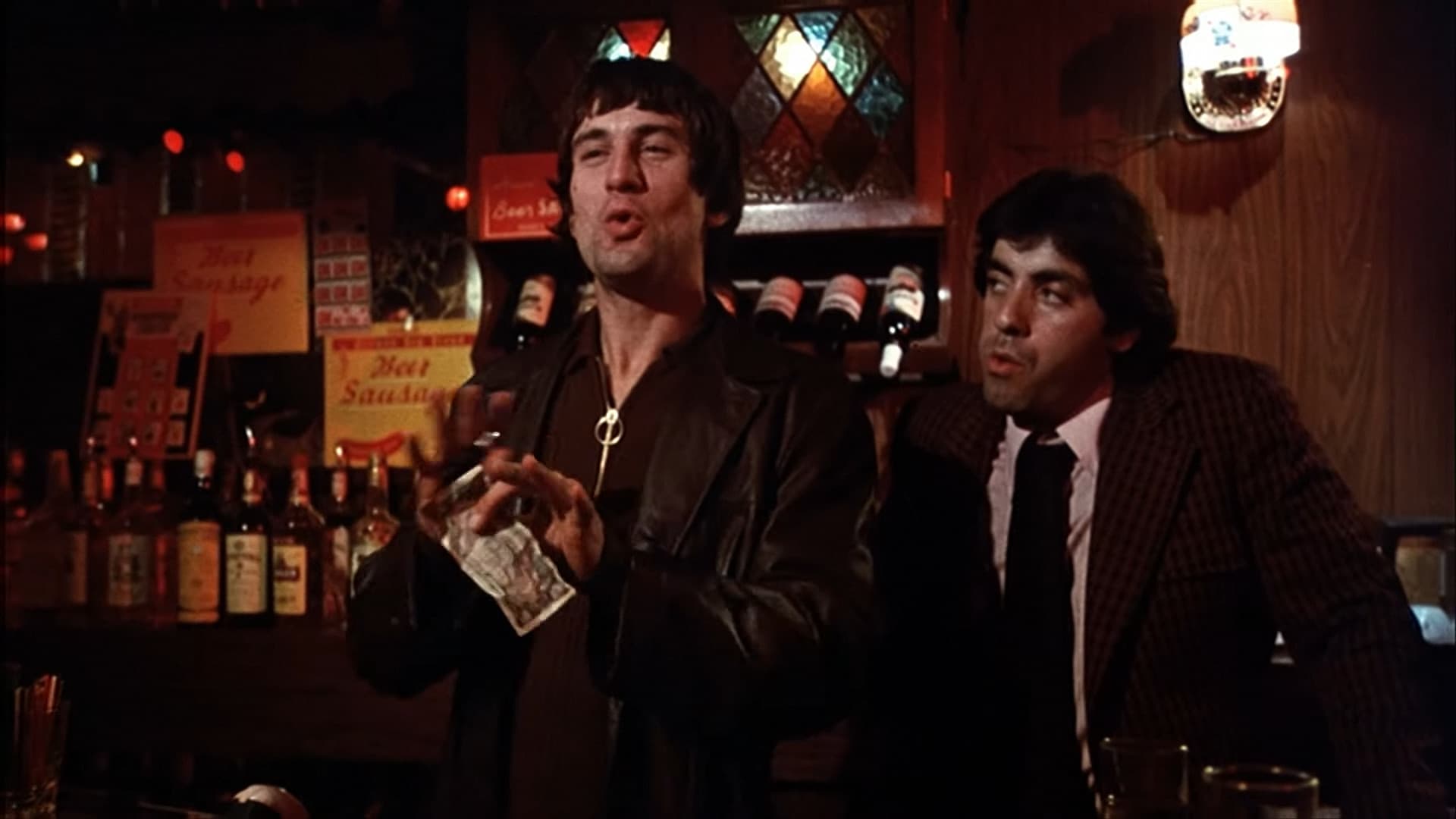
Martin Scorsese’s chart offers an unusually clear example of what happens when Scorpio becomes deeply rooted in the fourth house.
The fourth house has to do with family, ancestry, childhood, the home, the father, the private life, the emotional foundations of the personality, and the place from which the rest of the life grows. It is one of the deepest and most personal parts of the chart. It describes what we inherit, what surrounds us in childhood, what we absorb before we have the language to explain it, and what remains underneath the more visible parts of the life.
In Martin Scorsese’s chart, this house is not merely occupied. It is concentrated.
He has Mars, Mercury, the Sun, and Venus in Scorpio, all close to the IC, the lowest and most private angle of the chart. The IC is one of the four major angles, alongside the Ascendant, Descendant, and Midheaven. Planets placed near an angle become far more active and far more visible in the life, even when the angle itself describes something private.
This means that Scorsese’s Scorpio fourth house is not a subtle background influence. It is one of the central structures of his chart.
His childhood, family, neighborhood, inherited loyalties, fears, observations, religious life, artistic imagination, and eventual career all return to this one place.
Scorpio at the roots of the chart
Scorpio is fixed water.
Water signs are concerned with feeling, memory, emotional perception, attachment, fear, intimacy, and the things that move beneath the surface. Fixed signs preserve, intensify, and hold. They do not change direction easily.
Scorpio therefore does not simply feel. It retains.
It remembers what happened. It notices what is unspoken. It understands loyalties, betrayals, debts, rivalries, secrecy, danger, and the hidden exchange of power between people.
This does not mean that every person with Scorpio emphasized in the chart will be surrounded by crime, violence, or trauma. But Scorpio is often drawn toward the parts of life that people prefer not to discuss openly. It is interested in what is concealed, taboo, threatening, psychologically difficult, morally complicated, or emotionally intense.
When Scorpio occupies the fourth house, these themes may arise through the family, the home, the ancestry, the father, the neighborhood, or the atmosphere of childhood.
Scorsese’s life illustrates this with remarkable clarity.
A Leo Ascendant ruled from the fourth house
Scorsese has Leo rising.
The ruler of Leo is the Sun, and his Sun is in Scorpio in the fourth whole sign house.
The ruler of the Ascendant is one of the most important planets in any chart. It describes the direction of the life and shows where much of the person’s attention, energy, and identity become concentrated.
When the ruler of the Ascendant is placed in the fourth house, the life often remains deeply tied to family, origins, memory, home, ancestry, and the place one comes from.
For Scorsese, the Sun in the fourth house suggests that his identity is rooted in his childhood world.
He does not simply come from a particular neighborhood and family. He continually returns to that material. He interprets it, recreates it, films it, examines it, and builds his public work out of it.
The fourth house becomes the source from which the tenth house grows.
His career is visible to the world, but its material comes from something private, old, inherited, and deeply remembered.
The Sun in the fourth house and early memory
The Sun illuminates whatever part of the chart it occupies.
It brings consciousness, attention, intelligence, visibility, and the need to understand.
People with the Sun in the fourth house can be unusually aware of their childhood, their family dynamics, and the emotional atmosphere of the home. They may remember early experiences with unusual clarity or spend much of their adult life trying to understand where they came from.
In the documentary about his life, Scorsese speaks about memories from an exceptionally early age.
One of his earliest memories is being fed in a high chair as a very small child. He also recalls scenes from when he was around three years old.
That degree of early memory is striking.
The fourth house describes childhood, and the Sun makes the contents of that house conscious. In Scorsese’s case, the Sun appears to illuminate the earliest layers of memory itself.
He does not speak about childhood vaguely. He remembers scenes, locations, emotional atmospheres, family tensions, neighborhood behavior, and the feeling of particular places.
This is exactly the kind of consciousness we might expect from a chart in which the ruler of the Ascendant is placed in the fourth house, close to the IC, surrounded by several other planets.
His roots were not merely formative. They were observed.
A crowded fourth house as family resources
Scorsese grew up surrounded by a large extended family.
Many relatives lived nearby, and the family network was physically concentrated in the same area. His childhood world was full of people, relationships, loyalties, stories, tensions, and inherited expectations.
Planets can be understood as resources.
A house containing several planets often has a great deal of energy, material, complexity, and activity available to it. The person may experience that area of life as crowded, demanding, rich, or impossible to ignore.
Scorsese’s fourth house contains several planets, and his family life appears to have had exactly this quality.
There was a great deal there.
There were strong personalities, protective bonds, conflict, secrecy, memory, religion, neighborhood loyalty, and a constant awareness of who belonged to whom.
His family was not an abstract background. It was an active social world.
Mars in Scorpio and the father
The fourth house has traditionally been associated with the father.
Scorsese has Mars in Scorpio in the fourth house, in its own domicile.
Mars in Scorpio is strong. Mars acts with concentration, persistence, strategy, emotional force, and an instinct for survival. It does not act casually. It acts from depth.
Scorsese recalls one of his earliest traumatic memories as seeing his father become involved in a physical fight with the landlord.
This is an almost literal expression of Mars in the fourth house.
The father is shown through the fourth house. Mars describes conflict, violence, confrontation, and physical struggle. Scorpio adds intensity, loyalty, danger, and the sense that the conflict is not merely superficial.
The family then became involved in protecting one another.
This is also important.
Mars in Scorpio is not simply aggressive. It is defensive, strategic, tribal, and highly conscious of threat. The instinct is often to protect the inner circle and distrust what lies outside it.
Scorsese described his family as deeply mistrustful of outsiders.
They distrusted institutions, the government, and people who did not belong to their own specific cultural group. Even being Italian was not enough; one had to belong more precisely to the same inherited world.
This is a strongly Scorpionic pattern.
Scorpio is slow to trust because it assumes that every bond carries consequences. Trust is not given casually. It is earned through loyalty, history, secrecy, and proof.
Once Scorpio forms an emotional judgment, it can be extremely difficult to change.
Fixed water and inherited mistrust
Taurus is often described as stubborn because it is fixed earth.
Scorpio is equally fixed, but its fixity is emotional.
Earth preserves form. Water preserves feeling.
Scorpio may therefore hold onto an emotional conclusion long after circumstances have changed. It remembers danger, betrayal, insult, loyalty, and debt.
This is part of why Scorpio can be so perceptive about power.
It does not take people entirely at face value. It notices what they want, what they fear, what they owe, and what they may be hiding.
In Scorsese’s childhood world, these kinds of calculations were not theoretical.
He grew up around adults who were conscious of who had influence, who was protected, who was dangerous, who owed a favor, and which relationships could not be escaped easily.
The emotional logic of Scorpio was built into the social structure of the neighborhood.
Neptune in the third house and the lost paradise
Scorsese’s third whole sign house is Libra, with Neptune placed there.
The third house describes the immediate neighborhood, local environment, streets, nearby people, and the ordinary world one moves through in childhood.
Scorsese described his first neighborhood in Corona, New York, as a kind of paradise.
That description is very Neptunian.
Neptune often idealizes the house it occupies. It can make that area feel dreamlike, beautiful, enchanted, spiritually charged, or difficult to perceive objectively.
The first neighborhood was remembered through this atmosphere of innocence and beauty.
However, the third house was ruled by Venus, and Venus was in Scorpio.
The planet placed in a house may describe the immediate experience, but the ruler of the house often has the final word. Neptune gave the neighborhood its idealized quality, but Venus in Scorpio eventually pulled the story toward displacement, fear, ugliness, and emotional intensity.
After the conflict involving his father and landlord, Scorsese’s family had to leave.
He described the move as being cast out of paradise.
This is a striking image for Neptune in the third house ruled by Venus in Scorpio.
The first neighborhood was idealized. The later reality was darker.
Venus in Scorpio and beauty made from ugliness
Venus is in exile in Scorpio.
This does not mean that Venus becomes incapable of producing beauty. It means that Venus must work in an environment that is contrary to its usual nature.
Venus prefers harmony, pleasure, grace, proportion, connection, beauty, affection, and peace.
Scorpio is ruled by Mars.
It brings Venus into contact with conflict, fear, loss, death, taboo, sexuality, secrecy, emotional extremity, and the darker parts of human behavior.
Venus in Scorpio therefore often has to create beauty out of difficult material.
This is one of the clearest signatures in Scorsese’s chart.
He became an artist, but his art repeatedly returned to violence, crime, moral corruption, betrayal, male rivalry, obsession, spiritual conflict, and emotional damage.
He did not beautify life by avoiding what was ugly.
He made art through ugliness.
That is a very different Venusian task.
The new neighborhood as a Scorpionic landscape
The neighborhood Scorsese moved into was far less idealized.
He described children fighting in the street, people throwing garbage, substance abuse, fear, violence, and a general atmosphere of danger.
At night, he said, it could resemble Night of the Living Dead.
This is an extraordinarily Scorpionic description.
Scorpio is associated with death, decay, fear, the underworld, horror, and the return of what should remain buried. It is no accident that Scorpio season overlaps with the imagery of Halloween, ghosts, corpses, monsters, and the unsettling boundary between life and death.
Venus ruling the third house from Scorpio gives a neighborhood experienced through exactly this kind of imagery.
The neighborhood is not presented as pleasant or socially harmonious. It becomes the setting in which fear, violence, decay, and emotional intensity are observed.
Yet Venus is still Venus.
What Scorsese later does is turn these scenes into art.
The disturbing neighborhood becomes cinematic material.
The frightening world becomes composition, dialogue, character, rhythm, image, and story.
Mercury and Mars in Scorpio
Mercury is also in Scorpio, close to Mars.
Mercury describes speech, memory, thought, storytelling, observation, language, and the way a person organizes experience mentally.
Mercury in Scorpio notices what others leave unsaid.
It is interested in hidden motives, danger, crime, secrecy, psychological pressure, and conversations that carry consequences.
When Mercury is connected with Mars, speech may become sharp, intense, frightening, confrontational, or preoccupied with violent material.
Scorsese grew up hearing conversations about crime, retaliation, influence, obligation, and the danger of accepting favors.
His father warned him that once the mafia did something for you, you would owe them, and the obligation could continue for years.
This is a profoundly Scorpionic lesson.
Nothing is free.
Every exchange creates a bond.
Every favor may become a debt.
Every relationship has a hidden structure of power.
Mercury in Scorpio records these things.
Mars gives them urgency and danger.
Silence as protection
Scorsese’s mother taught him that if he saw something in the neighborhood, he should not speak about it.
Silence was a form of protection.
This, again, is highly consistent with Mercury in Scorpio.
Scorpio does not believe that all information should be shared. Knowledge is power, and speech can expose a person to consequences.
In some environments, survival depends on knowing what not to say.
Scorsese appears to have understood this early.
He observed closely, but he was careful.
He saw what was happening around him, absorbed it, remembered it, and later transformed it into film.
The material was not immediately spoken. It was preserved until it could be expressed in another form.
Jupiter as protection
One of the most important mitigating factors in Scorsese’s chart is Jupiter in Cancer.
Jupiter is exalted in Cancer and forms strong trines to the Scorpio planets, including the Sun and Venus.
Jupiter is placed in the twelfth whole sign house, which would not ordinarily be considered an easy position. The twelfth house has traditionally been associated with loss, isolation, hidden enemies, mental suffering, confinement, and circumstances beyond conscious control.
But Jupiter is unusually strong.
It is exalted, closely connected with the Sun, and in mutual reception with the Moon in Pisces. The Moon is in Jupiter’s sign, while Jupiter is in the Moon’s sign.
This mutual reception allows the two planets to support one another despite their placement in difficult houses.
Jupiter is also stationing, which intensifies its presence.
The result is a Jupiter that carries considerable protective force.
Scorsese was exposed to frightening circumstances, but he was also repeatedly protected from being consumed by them.
He saw violence without becoming part of it.
He knew people connected with crime without fully entering that world.
He had access to powerful people and dangerous places, but he was often allowed to move through them safely.
The trine from exalted Jupiter to the ruler of the Ascendant appears to describe a real measure of protection, opportunity, and help.
Chiron on the Ascendant and childhood illness
Scorsese’s Ascendant is close to Chiron.
Chiron often describes an area of life where there is a wound, limitation, or difficulty that cannot simply be solved through force of will.
When Chiron is close to the Ascendant, the wound may involve the body, health, physical identity, or the person’s ability to participate in life in the expected way.
Scorsese suffered from asthma as a child.
He wanted to play outside with other children, but his breathing difficulties forced him to remain indoors and watch from a distance.
This created a sense of separation.
He was physically present in the neighborhood but not able to participate in it freely.
The sixth house of illness is ruled by Saturn, and Saturn is in Gemini, a sign associated with breathing and the lungs. Saturn often describes chronic conditions, restriction, delay, and problems that improve only gradually with age.
This combination fits his experience well.
The illness limited him, but it also shaped his way of seeing.
He became an observer.
The cinema as a place where he could breathe
During hot summers, movie theaters were among the few places with air conditioning.
Scorsese’s father took him to the cinema because it was one of the only places where he could breathe comfortably.
This detail connects several parts of the chart at once.
The father belongs to the fourth house.
The career belongs to the tenth house.
The tenth house is ruled by Venus, and Venus is placed in the fourth.
The father therefore becomes directly involved in the future career.
He brings the child into the place that will later define his public life.
The health limitation, which might initially appear only as a deprivation, becomes part of the path toward cinema.
This is one of the most beautiful examples of how difficult placements can become structurally important.
The asthma excluded him from ordinary childhood activity, but it moved him toward observation, image, story, darkness, enclosed spaces, and film.
The place where he could breathe became the place where he learned to see.
Venus cazimi the Sun
Venus is extremely close to the Sun.
This is a condition known as cazimi, meaning that the planet is in the heart of the Sun.
A planet cazimi is not simply combust or overwhelmed. It is brought into a position of heightened importance, visibility, insight, and authority.
Venus cazimi suggests an unusually concentrated relationship with art, beauty, image, aesthetics, relationships, and creative intelligence.
In Scorsese’s case, Venus also rules the tenth house of career and achievement.
His artistic vocation is therefore placed in the heart of the Sun, which rules his Ascendant.
The career is not separate from identity.
Art is not merely something he does.
It is central to who he is.
The conjunction occurs in Scorpio and in the fourth house, so the art must emerge from that world: family, ancestry, neighborhood, memory, violence, secrecy, religion, fear, and emotional intensity.
The father, the priest, and the filmmaker
Scorsese identified three major figures he looked up to at different stages of life:
- his father
- the priest
- a teacher at NYU who spoke passionately about filmmaking
These three figures correspond closely with the main structures of the chart.
The father belongs to the fourth house.
Priesthood and religion belong to the ninth house.
The ninth house is Aries, ruled by Mars in Scorpio in the fourth.
The third house also has traditional associations with ritual and religious practice, and it is ruled by Venus, also in the fourth.
The filmmaker belongs to the tenth house of vocation and public achievement, again ruled by Venus in the fourth.
Different paths appear to lead back to the same place.
The father, religion, and cinema are not separate strands. They are all rooted in the Scorpio fourth house.
This is why the chart feels so coherent.
Religion as refuge
At one stage, Scorsese considered becoming a priest.
The church offered relief from the violence, fear, crime, and emotional pressure of the neighborhood.
It was a protected space.
Religion became a sanctuary from the Scorpionic world of the fourth house, but it was also connected to it.
The ruler of the ninth house was Mars in Scorpio in the fourth.
His religious longing emerged directly out of the family and neighborhood environment.
He did not turn toward religion in abstraction. He turned toward it because he needed refuge from what surrounded him.
The church provided order, ritual, quiet, meaning, and safety.
Venus also plays a role here because ritual, beauty, and ceremonial form belong to Venus.
With Venus cazimi the Sun, there is a deep responsiveness to image, ritual, atmosphere, and symbolic form.
This same sensitivity later becomes cinematic.
The church and the cinema are not identical, but both are enclosed spaces of image, light, ritual, silence, and emotional transformation.
The tenth house ruled by Venus in Scorpio
Scorsese’s tenth whole sign house is Taurus.
The tenth house describes career, achievement, public reputation, ambition, and the work for which a person becomes known.
Taurus is ruled by Venus.
That Venus is in Scorpio in the fourth house.
His career is therefore ruled by a planet of art placed in a sign of violence, taboo, intensity, and emotional darkness, and located in the house of childhood, family, and roots.
This describes his work with extraordinary economy.
He became known for art based on the difficult material of his origins.
His public achievement came from his private world.
His films repeatedly transformed the emotional and social landscape of his childhood into visible form.
Mean Streets and the neighborhood made into art
Scorsese’s early breakthrough film, Mean Streets, was built directly from the world he knew.
The characters were shaped by people from his neighborhood.
The film presented crime, loyalty, Catholic guilt, male friendship, violence, debt, danger, and the fragile codes by which people try to survive.
One character was based on a man Scorsese knew who repeatedly entered dangerous situations and somehow survived.
Scorsese described the world of the film as one of intense male relationships.
That phrase could almost serve as a description of Mars in Scorpio.
Mars describes men, conflict, competition, aggression, risk, and force.
Scorpio intensifies emotional bonds and makes loyalty inseparable from danger.
The relationships are not casual. They are charged, unstable, protective, destructive, and deeply personal.
Venus, the ruler of the tenth house, makes art out of this Mars-ruled material.
Why the violence feels genuine
Scorsese has frequently been criticized for his fascination with violence.
But his films do not usually treat violence as decorative.
The violence has emotional, moral, social, and psychological weight.
It changes relationships. It creates debt. It reveals character. It destroys trust. It exposes the hidden structure of the world.
This is one reason the Scorpio symbolism is so important.
Scorpio is not interested in violence merely as spectacle. It is interested in what violence reveals.
Who has power?
Who submits?
Who betrays whom?
What does loyalty cost?
What happens after the act?
What does guilt do to the soul?
These are Scorpionic questions.
Scorsese spoke about wanting to portray violence truthfully.
That truthfulness may be part of why his work succeeded despite the difficulty of Venus in Scorpio.
Venus in exile can create art from disturbing material, but it needs help if the work is to rise above ugliness or sensationalism.
Scorsese’s Venus receives that help.
It is cazimi the Sun.
It is trined by exalted Jupiter.
It belongs to a chart with strong reception and dignity.
The difficult material is therefore not left unshaped.
It is given artistic intelligence, moral awareness, scale, and form.
Jupiter and access to hidden worlds
Scorsese had access to locations and people that others could not easily reach.
He was able to film in places where permission depended on local power structures and relationships with the mob.
This is a compelling expression of Jupiter in the twelfth house supporting the Scorpio planets.
The twelfth house concerns hidden systems, secretive institutions, people operating outside ordinary visibility, and worlds that are not fully accessible to the public.
Jupiter there can sometimes bring help from hidden places.
Because Jupiter is exalted and strongly connected to the Sun and Venus, Scorsese appears to have benefited from people with influence who opened doors, granted access, or protected him.
The same world that contained danger also provided material, opportunity, and unusual access.
This is another reason the chart cannot be interpreted through simple labels such as good or bad.
The twelfth house is difficult, but Jupiter is powerful.
Scorpio is intense, but Mars is dignified.
Venus is in exile, but cazimi and supported.
The chart repeatedly converts difficulty into capacity.
Dignity, exile, and standing out
Scorsese’s chart contains several planets in unusually strong or unusually difficult conditions.
Mars is in domicile in Scorpio.
Jupiter is exalted in Cancer.
The Moon and Jupiter are in mutual reception.
Venus is in exile in Scorpio but cazimi the Sun and trined by Jupiter.
Charts of highly accomplished people often contain this kind of extremity.
Planets in domicile or exaltation tend to act with unusual strength, authority, or visibility.
Planets in fall or exile may also stand out, although often through struggle, contradiction, or the need to work in conditions that do not suit them naturally.
Scorsese’s Venus is a good example.
Venus is not comfortable in Scorpio, but this discomfort becomes the basis of an artistic vocation.
He does not create art from ease.
He creates art from what is difficult to look at.
Scorpio as memory, inheritance, and transformation
The deepest theme in Scorsese’s chart is not simply violence.
It is the transformation of inherited experience.
The fourth house gives the raw material.
Scorpio gives the intensity.
Mercury remembers and narrates.
Mars gives danger and force.
Venus gives artistic form.
The Sun makes the material conscious.
Jupiter protects, enlarges, and gives the work reach.
This is why the chart feels so complete.
The same neighborhood that frightened him gave him characters.
The same family that taught him secrecy gave him stories.
The same illness that restricted him brought him into cinemas.
The same religious world that offered refuge gave him ritual, guilt, redemption, and moral conflict.
The same violence he witnessed became the subject through which he developed an artistic language.
The fourth house is the root.
The tenth house is the visible tree.
In Scorsese’s chart, the tree never stops drawing from the root.
What this chart teaches about Scorpio in the fourth house
Scorpio in the fourth house does not automatically describe a violent family or criminal environment.
But it often suggests that the roots of the life are emotionally intense.
There may be secrecy, mistrust, crisis, inherited fear, strong loyalty, emotional survival, taboo subjects, or family experiences that leave a permanent psychological impression.
The person may understand very early that family bonds carry power.
They may become highly observant of what is hidden.
They may remember the atmosphere of childhood with unusual force.
They may also spend much of their life transforming private experience into something more conscious.
Scorsese’s chart shows the creative potential of this placement.
The fourth house does not remain buried.
Its contents are brought into art.
Scorpio does not merely survive what is difficult.
It studies it, preserves it, enters it, and transforms it.
That is perhaps the clearest way to understand Martin Scorsese’s work astrologically.
His films are not separate from his roots.
They are his roots, made visible.